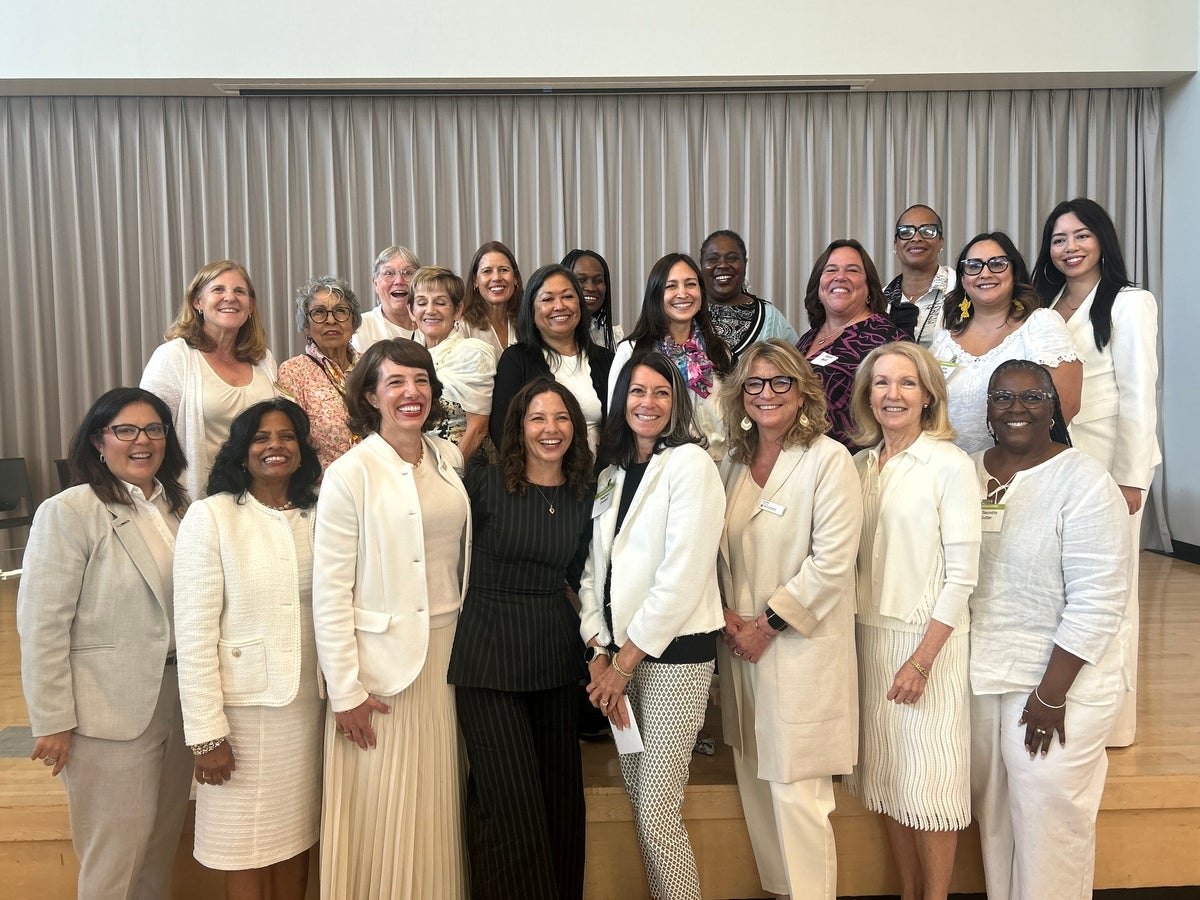
Samaritan House now serves 32,000 households in San Mateo County, more than double the 14,000 it helped before the COVID-19 pandemic, CEO Laura Bent told a Women's Equality Day panel at the Burlingame Community Center on Wednesday, August 26.
The panel, titled "From Voice to Vote: Affordability at the Ballot Box," connected the 19th Amendment's legacy to present-day housing, childcare and cost-of-living pressures facing county residents, according to San Mateo County's event summary. The San Mateo County Commission on the Status of Women hosted the event. KQED senior editor Erin Baldassari moderated.
"We're often underwriting the costs and the expenses of living here," Bent said. "So while we have great wealth, there is great need in the community."
Many families her organization serves have multiple people working two, three or even four jobs while sometimes sharing housing with other families, Bent said.
Bent also pointed to the county's ongoing dispute with the state over vehicle license fee funding, which San Mateo County officials warned in August could force deep cuts to local services. She cited it as an example of an issue residents may not vote on directly but can still influence through advocacy.
San Mateo County Supervisor Lisa Gauthier, who represents District 4 and sponsored the Board of Supervisors' Women's Equality Day proclamation earlier that day, said the right to vote remains "one of the most powerful tools we have to shape our communities." She called exercising it a responsibility to those who fought for suffrage.
A school district that built housing for its staff
Kalimah Salahuddin, a founding member of the REACH Coalition and former Jefferson Union High School District board member, described a district that was losing about 30% of its staff each year. A survey found roughly a third of employees were considering leaving within five years because they could not afford housing nearby.
The district built 122 units of employee housing, financed in part through Measure J, a $33 million bond voters approved on June 5, 2018, with 55.79% support. The units sit on a 3.3-acre site in Daly City, with rents estimated at 50% of market rate.
During Salahuddin's years on the board, the district had never begun a school year fully staffed. The year the housing opened was the first time it did.
Salahuddin, who experienced homelessness as a single mother and sought help at Haven House, a shelter operated by LifeMoves, said meaningful civic participation goes beyond casting a ballot. Nearly two decades after that experience, she serves on the LifeMoves Board of Directors.
Childcare providers face the same cost pressures
Karen Pace, founding executive director of Ravenswood Early Learning, said her organization supports about 50 early childhood education providers serving children from birth to age 5. Those providers struggle to balance facility costs with the need to pay educators enough to live in the area, Pace said.
The Board of Supervisors' proclamation earlier on August 26 recognized that many women of color continued fighting for equal access to the ballot long after the 19th Amendment's 1920 ratification, culminating in protections provided by the Voting Rights Act of 1965.
Bent recalled advice from her grandmother, a Black woman who could not vote: use your voice and your vote.