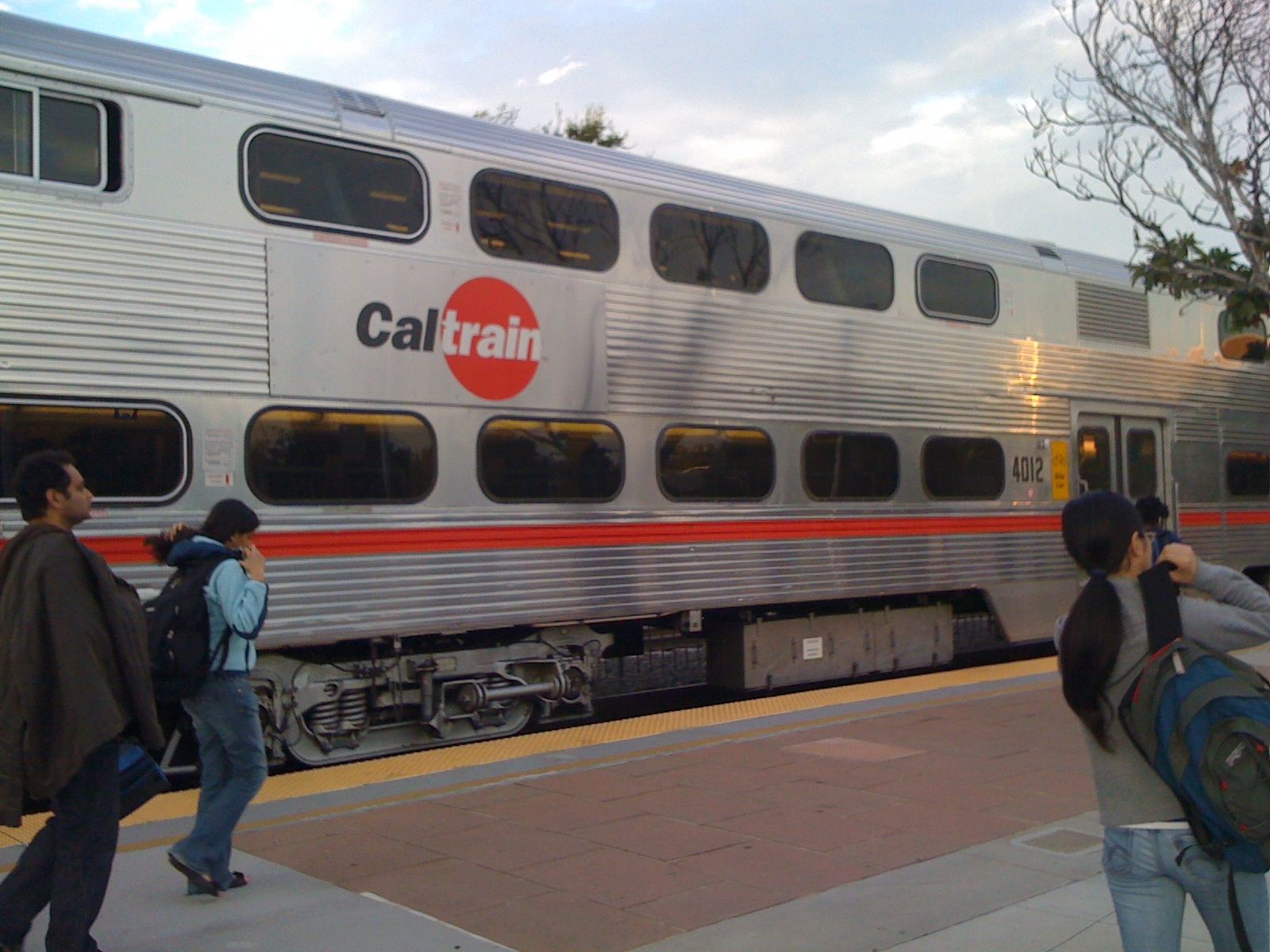
Caltrain could slash weekend service, close a third of its stations and stop running trains after 9 p.m. if voters reject a regional sales tax this November.
The agency told its Local Policy Maker Group on Thursday, Aug. 27, that it faces an average operating deficit of $75 million a year beginning in fiscal year 2028, according to the meeting agenda. A one-time state loan covers the current fiscal year, but no recurring revenue source exists beyond that.
In June, Caltrain's board adopted a "No External Funding Scenario" spelling out what happens if the money doesn't materialize. The plan calls for hourly weekday service, elimination of all weekend trains, an end to service after 9 p.m., no special-event trains and closure of up to one-third of all stations.
November ballot measure
The proposed fix is the Connect Bay Area Act, a five-county sales tax measure on the November ballot. It would impose a half-cent sales tax in Alameda, Contra Costa, San Mateo and Santa Clara counties and a 1-cent tax in San Francisco for 14 years, KQED reported. The Metropolitan Transportation Commission estimates the measure would generate about $980 million a year across the region.
San Mateo County's share would be roughly $50 million annually in locally controlled transit funding, or about $700 million over the life of the measure, according to SamTrans.
A Santa Clara County Superior Court judge on Aug. 27 rejected a lawsuit that challenged the ballot measure's language as misleading, the Mercury News reported. The ruling leaves the ballot question intact.
Not everyone supports the tax. Marc Joffe, treasurer of the Committee for Affordable Bay Area Transit, told the Mercury News after the ruling: "We're disappointed with the outcome but we will be continuing to fight this tax with all the abilities that we have."
Burlingame crossings mapped
The Aug. 27 meeting also covered Caltrain's new Corridor Crossing Strategy, adopted by the board in June. The plan identifies all seven of Burlingame's at-grade crossings for baseline safety upgrades: Peninsula Avenue, Broadway, Morrell Avenue, Oak Grove Avenue, North Lane, Howard Avenue and Bayswater Avenue.
Six crossings are flagged for advanced work. Broadway is the top priority, listed as Group 1 for design and construction. North Lane is Group 2 for design. Bayswater Avenue is Group 3 for monitoring. Peninsula Avenue, Oak Grove Avenue and Howard Avenue are Group 4 for monitoring. Advanced enhancements can include quad gates, fencing, intrusion detection and lighting.
The crossing list will be updated annually and presented to the Caltrain board.
Ridership rising, but not enough
The deficit looms despite strong ridership gains. Caltrain averaged 47,459 weekday riders in July, up 18.7% from a year earlier. Weekend ridership exceeded pre-pandemic levels by 150% at the end of fiscal year 2026. Overall, the system reached 81.5% of pre-pandemic ridership, up from 64.4% at the start of the fiscal year.
Caltrain staff said in the Aug. 27 meeting materials that the trends are "positive, but not enough to ensure financial sustainability."
The next Caltrain board meeting is Thursday, Sept. 3, at 9 a.m. The next Local Policy Maker Group meeting is Oct. 22 at 5:30 p.m. via Zoom.