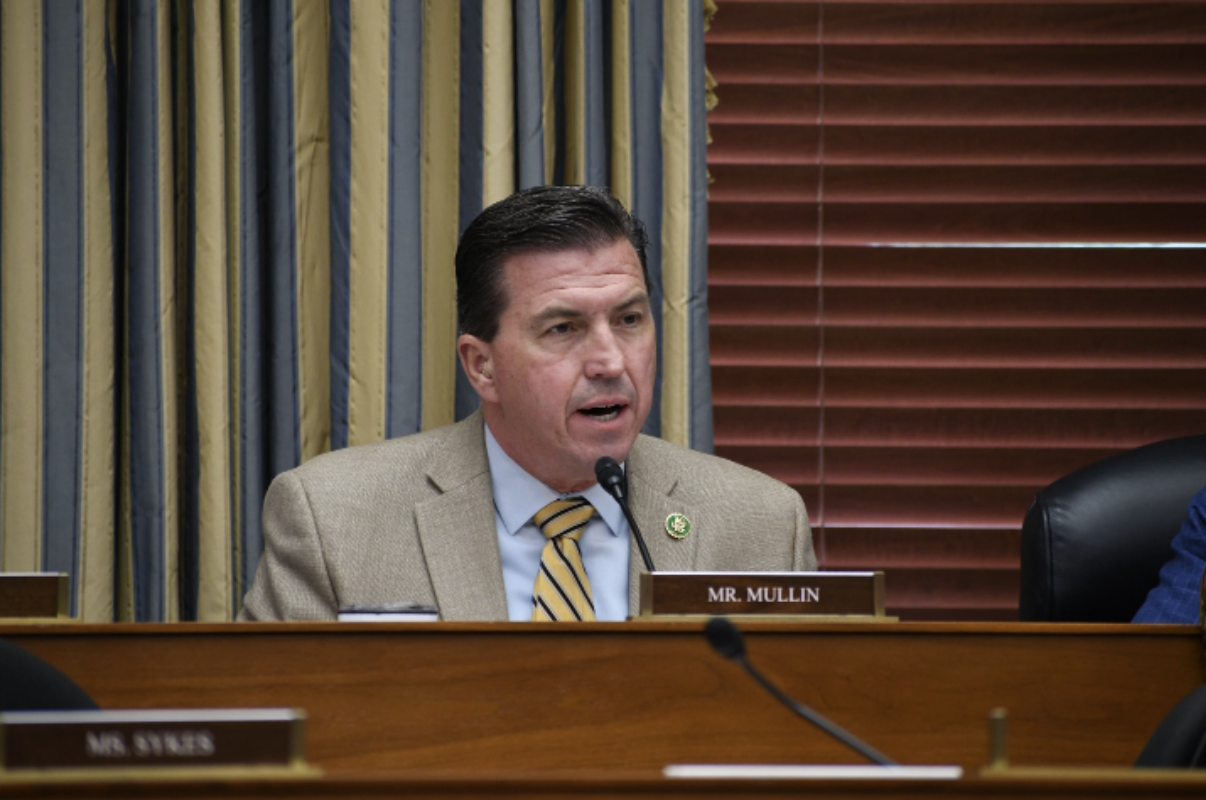
San Mateo County's more than 700 biotechnology companies face longer drug-approval timelines and regulatory instability as the FDA sheds staff and cycles through leaders, Rep. Kevin Mullin warned Congress on Monday, July 20.
Mullin, whose California 15th Congressional District includes Burlingame and Hillsborough, addressed a House Energy and Commerce subcommittee and released a letter to FDA Acting Commissioner Kyle A. Diamantas calling on the agency to restore stability to its drug-review process.
"Biotechnology companies require a consistent and reliable regulator to ensure that the safest and most effective drugs are getting to patients," Mullin wrote in the July 15 letter, released publicly on July 20. "Political whims cannot be allowed to continue to unnecessarily hinder this important domestic industry."
The FDA lost roughly 4,000 employees in 2025 under the direction of Health and Human Services Secretary Robert F. Kennedy Jr., a reduction of about 20% of the agency's workforce, according to Mullin's letter. The Center for Drug Evaluation and Research alone lost more than 1,000 staffers, dropping to staffing levels from a decade ago, Mullin wrote. CDER has had five different directors since January 2025.
Politico reported July 17 that CDER's total employee count stood at 4,895 as of the third quarter of fiscal year 2026, down from 6,058 at the end of the first quarter of fiscal year 2025. The center did add a net 26 employees in the most recent quarter, its first gain in more than a year.
Former FDA Commissioner Marty Makary resigned in May 2026 after a 13-month tenure marked by political pressure on scientific staff, Mullin's letter noted.
The Bay Area life sciences sector generated $121.6 billion in economic output in 2025 and employed more than 135,000 workers, according to the Biocom California 2026 Life Science Economic Impact Report released June 22. Many of San Mateo County's biotech firms are small businesses especially vulnerable to regulatory delays, Mullin wrote.
Mullin cited Denali Therapeutics in South San Francisco as an example of the industry's importance. The company received FDA accelerated approval on March 25 for Avlayah, the first drug to cross the blood-brain barrier for Hunter syndrome treatment and the first new therapy for the condition in nearly 20 years.
Investors are pulling back. A survey by the Rare Disease Advocacy, Biotechnology, and Investor Coalition found 84% of investors had decreased, paused, or exited rare disease investments because of FDA regulatory uncertainty, according to Mullin's letter. A separate Incubate Coalition survey concluded the FDA was "directly undermining confidence in regulatory predictability."
Rep. Frank Pallone of New Jersey, the top Democrat on the Energy and Commerce Committee, separately asked the Government Accountability Office on July 14 to investigate how cuts affected FDA staffing and use of industry user fees.
Mullin's letter does not specify a deadline for the FDA to respond. His district office is at 1528 South El Camino Real, Suite 307, San Mateo; residents can reach it at (650) 342-0300.