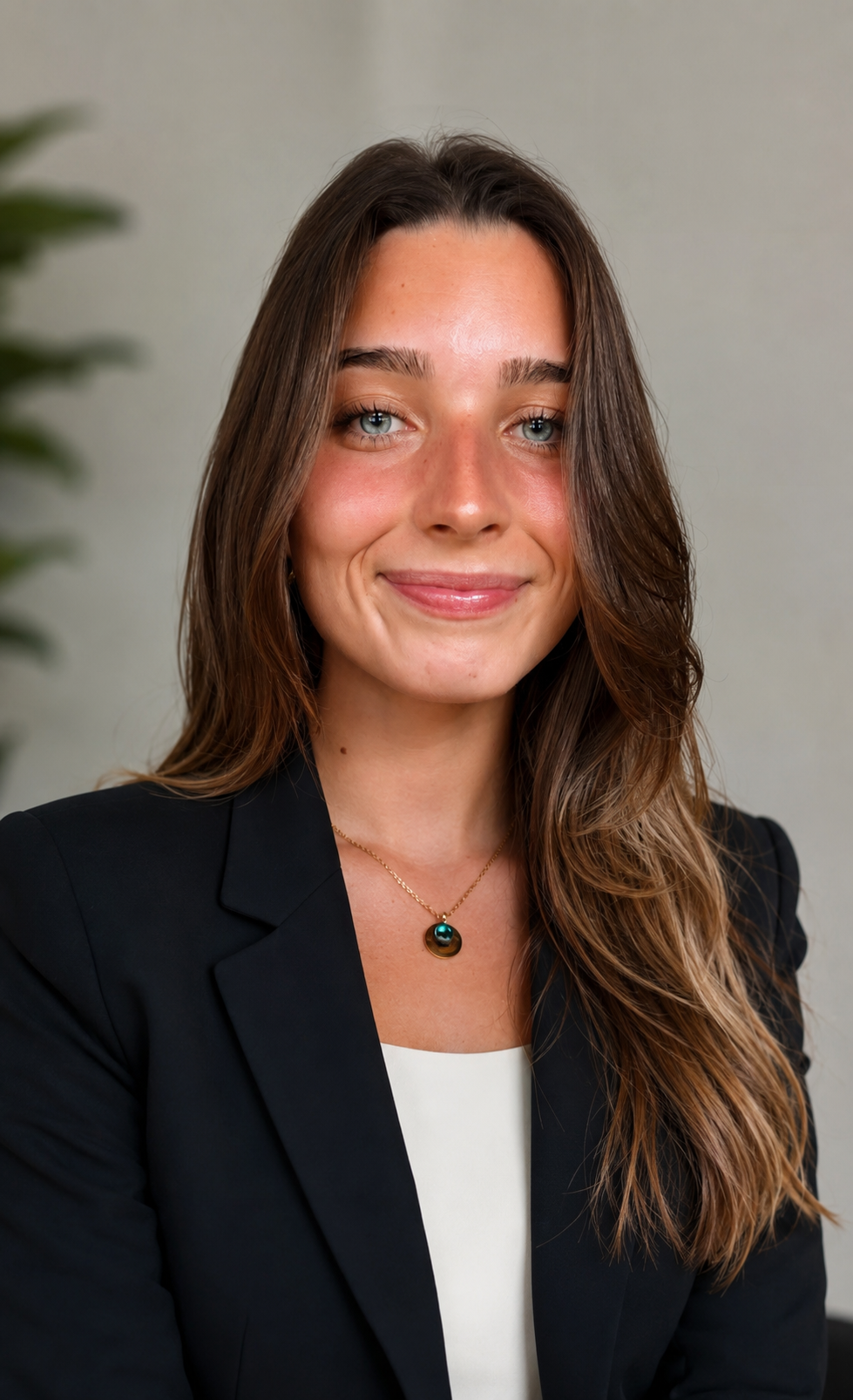
Student journalist Claire Dong wants Bay Area teens to talk about what happens when you can't speak your family's language.
Dong's article, published Saturday, July 18, on Local News Matters through the Mosaic Journalism program, profiles second-generation immigrant students who face labels like "no sabo kid," "banana," and "white-washed" because they speak English but struggle with their heritage tongue. The term "no sabo" comes from a Spanish mispronunciation of "I don't know" and is used to mock teens who can't communicate fluently in their parents' language.
"For many Bay Area Gen Z students, growing up disconnected from a family language is a complicated question of identity," Dong wrote.
The piece features Aveah Pok, 17, a second-generation senior at Aragon High School in the San Mateo Union High School District, who grew up navigating the gap between her English-speaking world and her family's heritage language.
Local context at Burlingame High
The identity tension Dong explores is familiar territory for many Burlingame families. At Burlingame High School, more than half of the 1,621 students identify as non-white, according to the school's 2025-26 profile: 24.2% Asian, 20.4% Latino, 11.5% multiracial, and 2.7% Filipino.
BHS offers three world language programs: Chinese (Mandarin), Italian, and Spanish. Students must complete at least one year to graduate. The district also runs Spanish for Native Speakers courses that address what the curriculum describes as "issues of identity of heritage speakers of Spanish in the United States."
In a May 2023 opinion piece for The Burlingame B, BHS's student newspaper, student Natalie Gyde argued the school's language department didn't reflect its diversity, noting at the time that the school had five Spanish teachers and one each for Chinese and Italian.
About Mosaic Journalism
Dong reported the story through Mosaic Journalism, a free, San Jose-based program that has trained teen journalists for three decades. Co-directed by Sharon Noguchi, a former Mercury News and Chalkbeat editor, and Mercury News columnist Sal Pizarro, the program reaches about 60 students each year. Its 2026 summer workshop ran June 8 through June 19 at San Jose State University. Student work appears in The Mercury News, on KALW public radio, and on Local News Matters, a nonprofit newsroom operated by Bay City News Foundation.
The full article is available at localnewsmatters.org.