Burlingame's Xona Space Systems cleared its final regulatory hurdle when the Federal Communications Commission authorized the startup July 31 to broadcast navigation signals from a planned 258-satellite constellation. The approval makes Xona the first private constellation authorized to broadcast radio navigation signals adjacent to GPS frequencies.
The company announced the milestone Aug. 3.
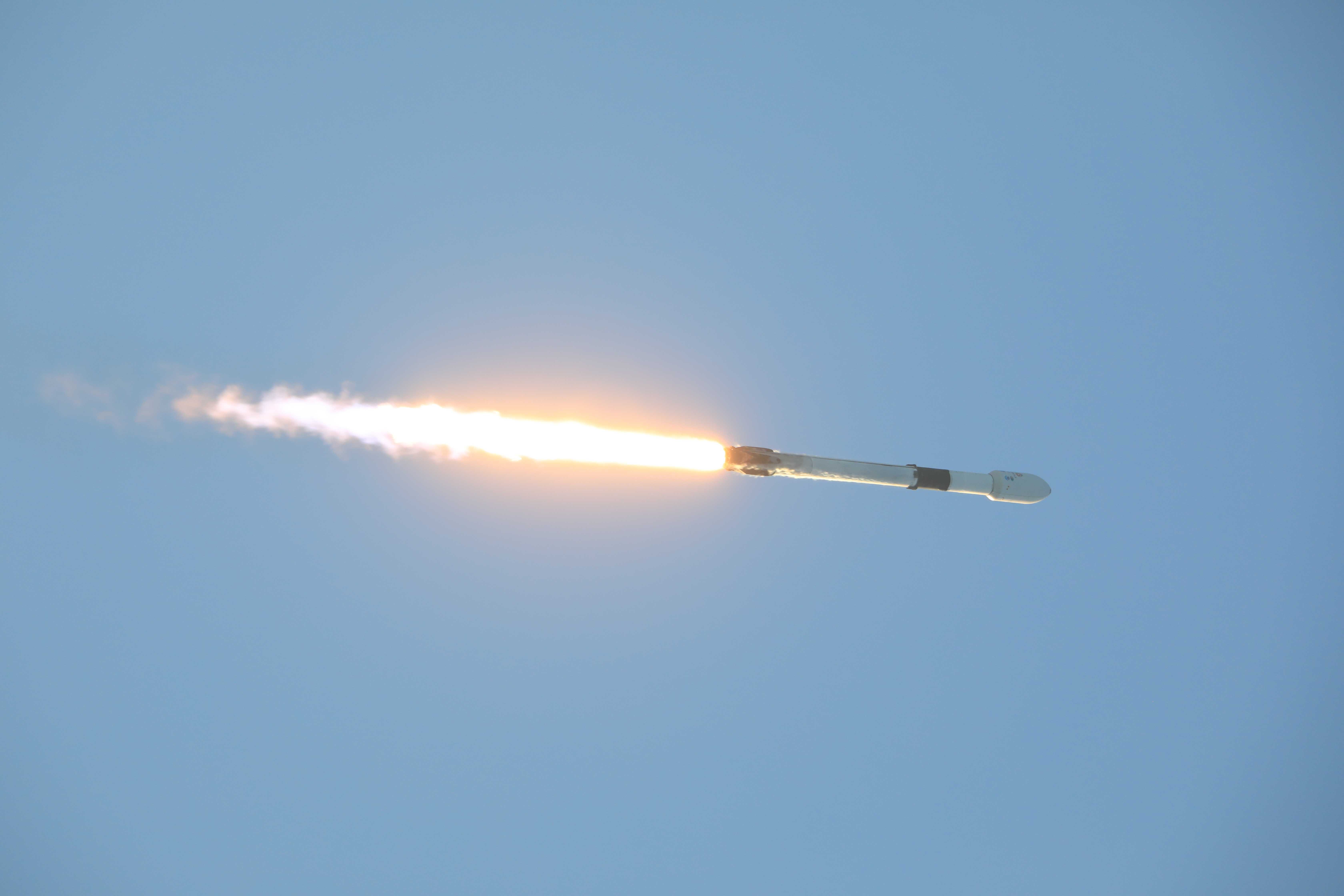
The authorization means Xona can now scale production at its Bayshore corridor factory, which opened in April, and launch its first six production satellites in October on a SpaceX rideshare mission. Two of those spacecraft were built at the Burlingame plant; the other four come from Aerospacelab, a Belgian manufacturer.
"The ball's really in our hands now to run it down-field, start launching satellites, and get up in the air," CEO and co-founder Brian Manning said.
The FCC license covers the full constellation but initially authorizes only 16 satellites. Xona must pass an updated orbital-debris assessment before launching more, and must halt transmissions immediately if they interfere with GPS or aviation systems. The agency set deadlines of July 2032 for half the constellation and July 2035 for completion.
Xona's Pulsar system transmits signals up to 100 times stronger than conventional GPS because its satellites orbit hundreds of miles above Earth rather than the 12,500-mile altitude of GPS spacecraft, according to SpaceNews. The signals use a cryptographic watermark to guard against spoofing, SatNews reported.
Manning, whose co-founders met at Stanford, has said Burlingame's location near autonomous-vehicle, robotics and AI companies was a deliberate choice. He told SpaceNews Magazine in August that proximity to potential customers in the Bay Area drove the decision to build here.
The company's first commercial users are expected to be telecommunications networks, financial institutions and data center operators that need precise timing rather than continuous navigation. That timing coverage becomes persistent once roughly 16 satellites are operating, with initial operations expected in early 2027.
Xona raised $170 million in March to fund the constellation's deployment. The Burlingame facility serves as the company's primary manufacturing plant, while a Montreal office handles engineering and development.
General counsel and vice president of external affairs Christina Youn said the approval followed years of demonstrating the system would not disrupt existing services. The FCC decision also gives Xona a protected position in the spectrum: future operators seeking L-band clearance will have to prove they do not interfere with both GPS and Pulsar.
That matters. U.S. Rep. Kevin Mullin has visited the Burlingame factory and signed a solar panel there, according to SpaceNews. The next public milestone is the October SpaceX launch carrying the first Burlingame-built satellites into orbit.